
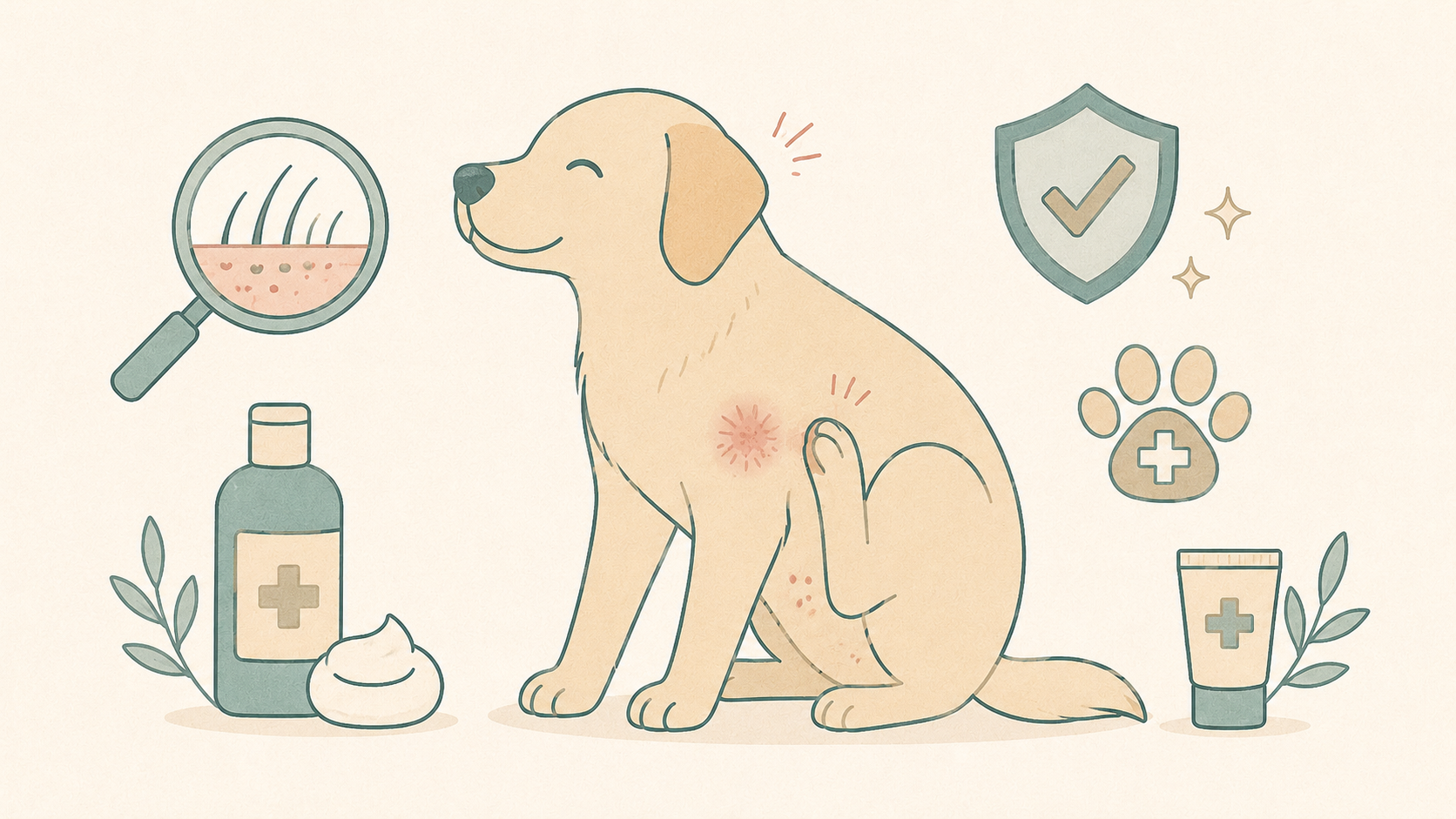
A dog’s skin is not just an outer covering but an important part of the body that protects it from irritants, infections, parasites, temperature changes, and mechanical damage. The condition of the skin and coat often reflects the animal’s overall well-being: if a dog constantly scratches, licks its paws, has redness, rashes, dandruff, bald patches, or an unpleasant odor, this may indicate not only local irritation but also a deeper problem.
Skin diseases in dogs can develop gradually or appear suddenly. Sometimes the owner first notices only mild itching, a few crusts on the skin, or a change in the coat’s smell. However, without timely diagnosis, mild irritation can become complicated by a bacterial or fungal infection, pain, scratching wounds, moist lesions, and chronic inflammation.
It is important to understand that skin diseases in dogs should not be treated at random. The same symptoms may occur with allergies, parasites, fungal infections, bacterial infections, hormonal disorders, or improper care. Therefore, if a dog has persistent itching, hair loss, wounds, an unpleasant smell, pustules, or changes in behavior, it should be examined by a veterinarian. Only a specialist can determine the cause of the problem and choose treatment that is safe for the specific animal.
What Are Skin Diseases in Dogs?
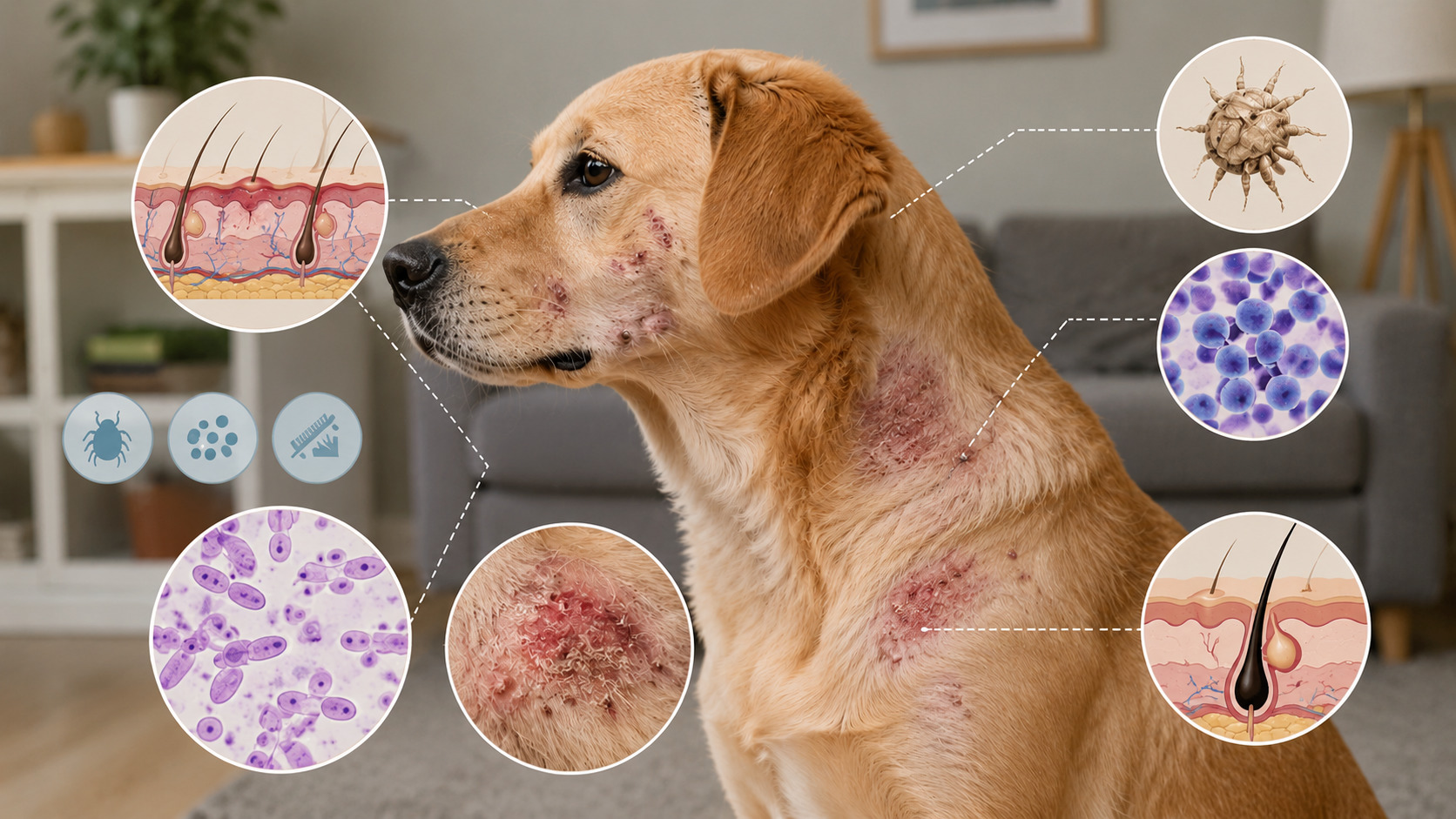
Skin diseases in dogs are a large group of conditions in which the normal appearance, structure, or function of the skin is disrupted. They can be independent diseases, such as fungal, bacterial, or parasitic lesions. At the same time, skin conditions in dogs are often an external sign of other problems in the body: allergies, endocrine disorders, immune system disturbances, nutrient deficiencies, or chronic stress.
A dog’s skin is constantly in contact with the external environment. It is affected by dust, pollen, grass, household chemicals, washing products, moisture, dry air, insect bites, and mechanical friction. If the skin’s protective barrier is weakened, irritants can trigger inflammation more easily. The dog begins to scratch, lick certain areas, and injure the skin with its claws or teeth, creating conditions for a secondary infection.
The condition of the coat also matters. A dull, brittle, greasy, or excessively dry coat, the appearance of dandruff, or bald patches may indicate that the body lacks proper care, balanced nutrition, or veterinary support. That is why owners should regularly examine their dogs after walks, bathing, grooming, and contact with other animals.
You can read more about general monitoring of an animal’s condition in the article on how to monitor your dog’s health. When it comes to skin, this kind of attentiveness is especially important, as many problems are easier to control at an early stage.
Main Causes of Skin Diseases in Dogs
The causes of skin problems can vary, and they often overlap. For example, a dog may have an allergy, scratch its skin because of itching, and then develop a bacterial or yeast infection on the damaged areas. That is why a veterinarian usually evaluates not only the rash or bald patches themselves, but also the dog’s diet, lifestyle, parasite prevention, seasonality of symptoms, age, breed, and accompanying signs.
The most common causes of skin diseases in dogs include the following factors:
- Parasites. Fleas, ticks, lice, and microscopic mites can cause severe itching, irritation, crusts, hair loss, and inflammation. Even scratches that look similar may have different causes, so it is important not to rely only on visual assessment.
- Allergies. Dogs may react to food ingredients, flea bites, pollen, dust, mold, grass, household chemicals, or grooming products. Allergic dermatitis in dogs often causes itching, redness, rashes, ear inflammation, and paw licking.
- Fungal and yeast infections. Fungal skin diseases in dogs can affect individual areas or spread more widely, especially if the immune system is weakened or the skin remains constantly damp. Some fungal infections require caution because they can be contagious to other animals and people.
- Bacterial infections. Damaged or inflamed skin becomes vulnerable to bacteria. This can lead to pyoderma in dogs, which may be accompanied by pustules, crusts, redness, itching, and an unpleasant odor.
- Nutrition-related problems. An unbalanced diet, deficiency of fatty acids, protein, trace elements, or individual food intolerance can worsen the condition of the skin and coat. Changing food without consultation does not always solve the problem, because the cause may not be related only to nutrition.
- Hormonal disorders. Some endocrine diseases may cause symmetrical hair loss, thinning of the skin, recurring infections, weight changes, lethargy, or increased thirst. Such conditions require proper diagnostics.
Hereditary predisposition should also be mentioned separately. Some breeds have a higher risk of allergic, seborrheic, or inflammatory skin diseases. However, breed is not a diagnosis: even if a dog belongs to a risk group, the final cause of symptoms is determined based on examination and, if necessary, additional tests.
Symptoms of Skin Diseases in Dogs
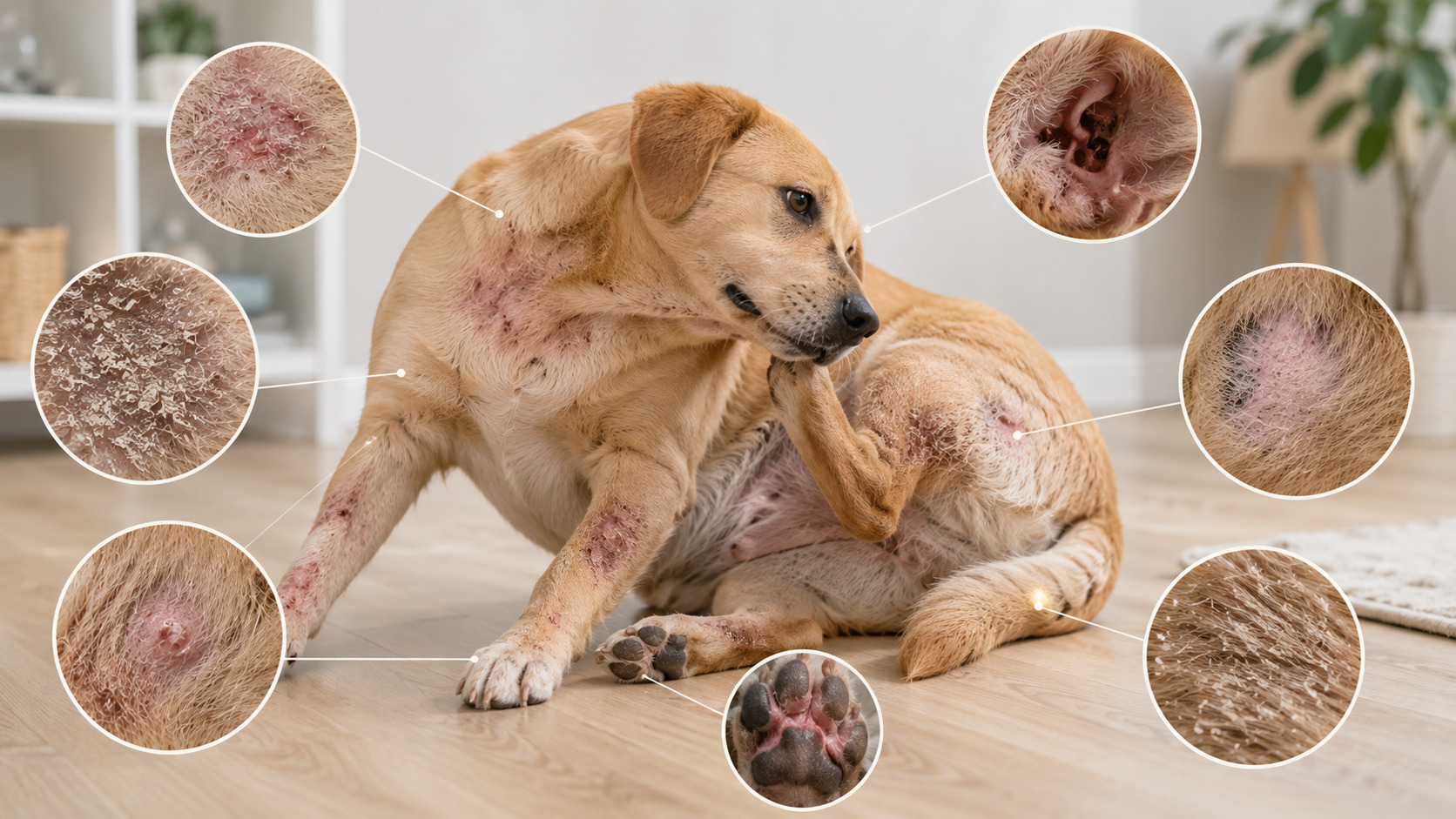
Symptoms of skin diseases in dogs may be obvious or almost unnoticeable at first. Some animals actively scratch, chew their paws or sides, and rub their muzzle against furniture. Others simply become restless, wake up more often, avoid touch, or react nervously to brushing. Owners should pay attention not only to visible skin changes but also to behavioral signals.
Typical signs include itching, redness, rashes, flaking, crusts, moist lesions, bald patches, unpleasant odor, excessive skin oiliness, coat discoloration from constant licking, pain when touched, and the appearance of pustules. If the symptoms do not go away after a few days, become worse, or keep recurring, this is a reason to contact a veterinarian.
Itching and Scratching
Itching is one of the most common symptoms that leads owners to visit a veterinarian. A dog may scratch its sides, neck, ears, belly, armpits, groin area, or the base of the tail. The animal may also lick its paws, chew its toes, rub its muzzle against the carpet or furniture, and react nervously when a specific part of the body is touched.
The causes of itching vary: flea bites, allergies, atopic dermatitis in dogs, food reactions, mange, demodicosis, bacterial infection, Malassezia overgrowth, or irritation after contact with an aggressive substance. The danger is that itching quickly creates a vicious cycle: the dog scratches, damages the skin, microorganisms enter microcracks, inflammation increases, and the itching becomes even stronger.
If a dog scratches its skin until it bleeds, cannot sleep properly and keeps the owners awake, constantly licks its paws, or has wounds on the skin, it is not worth waiting. In such cases, an examination is needed, because symptomatic washing with shampoo or applying ointments without guidance may mask the problem and complicate diagnosis.
Redness and Rashes
Skin redness may be local or widespread. It often appears on the belly, in the armpits, between the toes, on the muzzle, near the ears, in skin folds, or in areas where the coat is dense and poorly ventilated. Rashes may look like small red dots, papules, pustules, wet spots, crusts, or flaky areas.
These signs do not provide an exact diagnosis on their own. For example, dermatitis in a dog may result from an allergy, a parasite bite, bacterial infection, fungal infection, or contact with an irritant. Crusts may appear after scratching, with a superficial infection, after insect bites, or against the background of seborrhea. That is why it is important to assess not only the appearance of the rash but also its location, duration, seasonality, and the animal’s general condition.
Special attention should be paid to rashes that spread quickly, are accompanied by pain, swelling, pus, an unpleasant smell, or lethargy. Such signs may indicate active inflammation that should not be left without veterinary care.
Hair Loss and Unpleasant Odor
Hair loss may be even, patchy, or symmetrical. If a dog sheds seasonally but the skin is clean, without itching, redness, or bald patches, this is not always a pathology. However, the appearance of clearly defined bald areas, brittle hair, dark spots on the skin, crusts, or pustules requires attention.
An unpleasant skin odor often appears with bacterial or yeast infections, excessive oiliness, inflammation of skin folds, ear problems, or prolonged licking. If the smell returns quickly after bathing, the cause is probably not just a dirty coat. It may be seborrhea in dogs, Malassezia overgrowth, pyoderma, or another condition that requires treatment.
Greasy skin, sticky coat, dandruff, dark buildup in folds, itching, and odor often occur together. In this situation, it is important not simply to bathe the dog more often, but to find out why the skin has lost its normal balance. Excessive washing with unsuitable products may additionally irritate the skin and worsen dryness or oiliness.
The Most Common Skin Diseases in Dogs
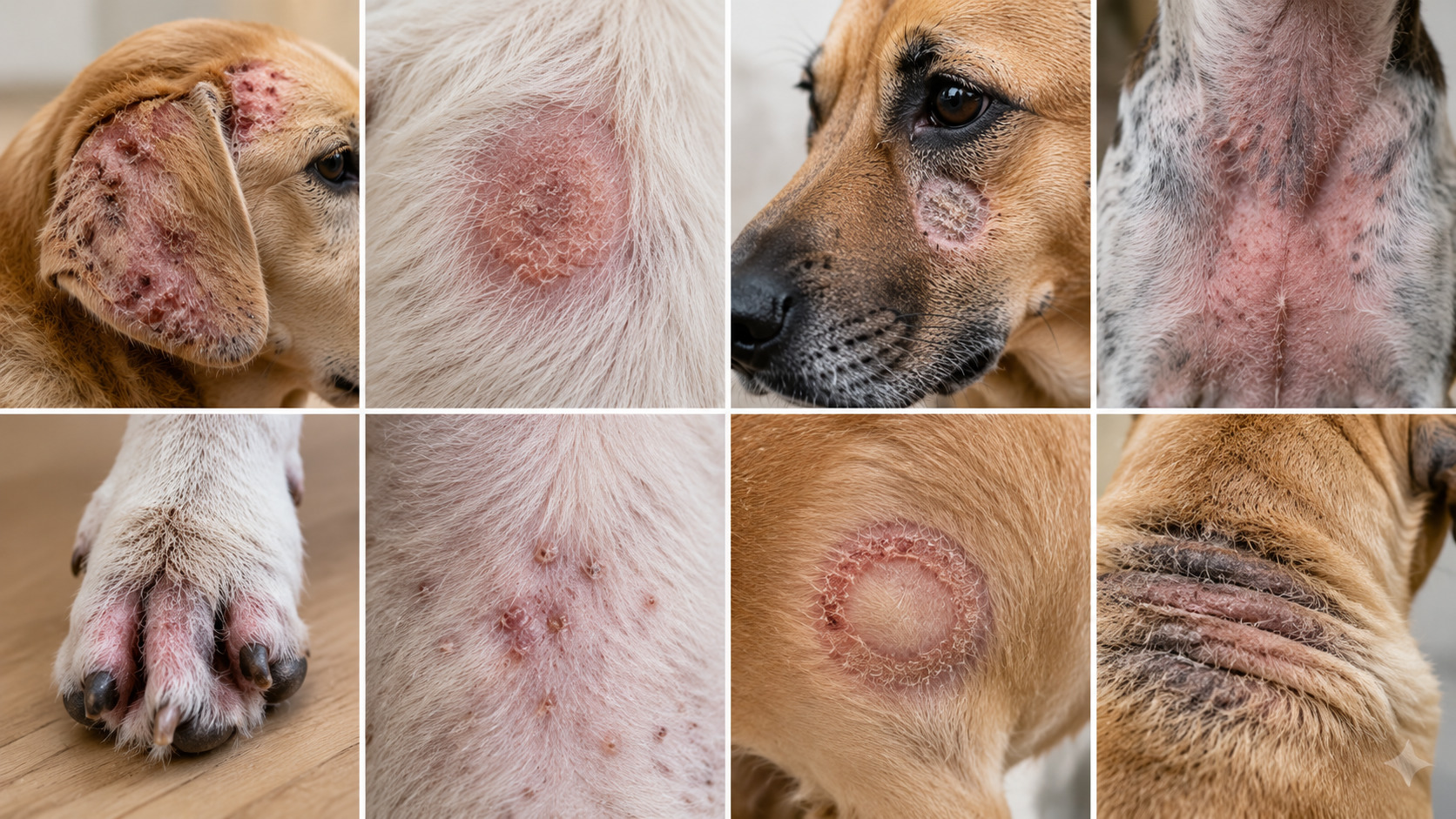
Different skin diseases in dogs may have similar symptoms: itching, redness, flaking, crusts, bald patches, unpleasant odor, rashes, or pustules. However, the treatment will be different. What helps with parasites will not resolve a food allergy. Antifungal products will not treat a hormonal cause of hair loss. Antibacterial therapy without identifying the underlying cause may provide short-term improvement but will not protect against recurrence.
Below are the most common skin diseases in dogs that owners encounter. This overview does not replace a veterinary consultation, but it helps explain why the same external sign can have different origins.
Allergic Dermatitis
Allergic dermatitis in dogs occurs when the immune system overreacts to a specific irritant. This may be flea saliva, a food ingredient, pollen, dust, mold, household chemicals, shampoo, grass, or another environmental substance. Allergy often causes not only a rash but also severe itching, redness, paw licking, ear inflammation, crusts, and secondary infection.
The difficulty with allergic dermatitis is that its signs may change. In some dogs, symptoms become worse seasonally, for example in spring or summer. In others, itching lasts all year round. If a dog is allergic to flea bites, even a small number of parasites can cause a pronounced reaction. Therefore, regular flea and tick prevention is important not only for parasite control but also for managing allergic flare-ups.
Treatment of allergic dermatitis depends on the cause. A veterinarian may recommend parasite control, diet correction, medicated shampoos, medications to reduce itching, treatment of secondary infection, or additional diagnostics. It is almost impossible to identify an allergen based only on the appearance of the skin.
Atopic Dermatitis
Atopic dermatitis in dogs is a chronic inflammatory skin disease associated with increased sensitivity to environmental allergens. Possible irritants include pollen, dust mites, skin particles, mold, and other substances that the dog comes into contact with at home or outdoors. Some animals have a breed-related or hereditary predisposition to this condition.
Typical signs of atopy include itching of the paws, muzzle, ears, armpits, belly, and areas between the toes. The dog may constantly chew its paws, shake its head, have red ears, dark spots on the skin, flaking, bald patches, or signs of secondary bacterial or yeast infection. Atopic dermatitis often has a wave-like course: periods of improvement are followed by flare-ups.
Completely “curing forever” atopy is usually difficult, so the goal of veterinary management is to control itching, support the skin barrier, reduce the frequency of flare-ups, and treat secondary infections in time. In some cases, a long-term care plan and regular follow-up examinations are needed.
Fungal Infections
Fungal skin diseases in dogs can appear in different ways. One well-known example is dermatophytosis, commonly called ringworm. It may cause round areas of hair loss, flaking, brittle hairs, crusts, and redness. Not all fungal lesions itch intensely, so the absence of severe itching does not rule out infection.
It is especially important to remember that some fungal infections can be transmitted to other animals and people. Therefore, if ringworm is suspected, random ointments or home remedies should not be used without veterinary guidance. Diagnosis is needed: examination, special tests, microscopy, culture, or other methods chosen by a veterinarian.
Treatment of fungal lesions may include topical products, systemic medication, environmental cleaning, washing bedding, and limiting contact with other animals. The duration of therapy depends on the type of fungus, the spread of the lesion, and the dog’s immune status.
Parasitic Diseases
Parasites are one of the most common causes of itching and skin irritation. Fleas can cause not only discomfort from bites but also flea allergy dermatitis. Ticks can trigger local inflammatory reactions, and some types of microscopic mites are associated with mange or demodicosis.
With demodicosis, bald patches, flaking, redness, comedones, and sometimes secondary bacterial infection may appear. In some dogs the process is localized, while in others it is widespread and requires more serious veterinary supervision. Mange, on the other hand, is often accompanied by very intense itching and may be contagious.
Parasitic problems are not always visible to the naked eye. The owner may not find fleas but may see their traces or only the consequences in the form of itching. Therefore, regular parasite prevention should be part of basic care, not just a reaction after symptoms appear.
Bacterial Infections
Bacterial skin lesions often develop as a secondary problem. This means that bacteria multiply actively against the background of another condition: allergies, parasites, scratching, hormonal disorders, injuries, increased moisture in folds, or a weakened skin barrier. One typical example is pyoderma in dogs.
Pyoderma may be accompanied by pustules, small rashes, redness, crusts, itching, hair loss, moist lesions, and an unpleasant odor. Sometimes the owner sees only “pimples” on the belly or under the coat, but the process may be more widespread than it seems at first glance.
Treatment of bacterial infections must be prescribed by a veterinarian. It may include topical antiseptics, medicated shampoos, anti-itch medication, and in some cases systemic therapy. It is important not only to eliminate bacteria but also to identify the underlying cause. If allergies, parasites, or another primary disease are not controlled, pyoderma may return.
Eczema
Eczema in dogs is an inflammatory skin condition that may cause redness, itching, moist lesions, crusts, flaking, or pain. In everyday language, the word “eczema” is often used for different types of irritation, but from a veterinary point of view, it is important to determine what exactly caused the inflammation.
Triggering factors may include allergies, insect bites, damp coat after bathing, poor drying of a thick coat, skin trauma, friction from equipment, dirt, improper care, or infection. In dogs with dense coats, hot moist lesions can develop quickly under the fur, and the owner may notice the problem only when the dog actively licks the area or does not allow it to be touched.
With eczema, it is not advisable to cover the area with tight bandages without a veterinarian’s recommendation or apply products intended for humans. Some medications may be dangerous for animals, especially if the dog licks them off the skin.
Seborrhea
Seborrhea in dogs is associated with disruption of the normal skin renewal process and sebaceous gland function. It may cause dry dandruff, oily skin, unpleasant odor, dull coat, flaking, crusts, and a tendency toward secondary infections. In some dogs, seborrhea is hereditary, but much more often it is secondary, meaning it develops because of another problem.
Seborrheic dermatitis in dogs may develop against the background of allergies, hormonal disorders, parasites, infections, or improper care. Therefore, it is important not to limit treatment to anti-dandruff shampoo alone. If the skin is constantly oily, has a strong odor, becomes dirty quickly after bathing, or the dog itches severely, diagnostics are needed.
Care for seborrhea often includes special veterinary washing products, infection control, correction of the underlying disease, and support of the skin barrier. The frequency of bathing and the type of shampoo must match the condition of the skin, because overly aggressive cleansing can worsen irritation.
Malassezia Overgrowth
Malassezia overgrowth is a condition associated with excessive multiplication of Malassezia yeast on the skin. In small amounts, these organisms can be part of the normal microflora, but when conditions change, they begin to multiply actively and cause inflammation. This often happens against the background of allergies, atopy, seborrhea, ear problems, increased moisture, or a weakened protective skin barrier.
Typical signs include itching, oiliness, dark buildup, redness, an unpleasant “yeasty” or musty odor, and inflammation between the toes, in folds, armpits, groin area, or ears. The dog may actively chew its paws, shake its head, rub against furniture, and poorly tolerate touching of the affected areas.
Treatment of Malassezia overgrowth depends on how widespread the process is. It may include topical antifungal products, medicated shampoos, ear cleaning, and control of allergies and other underlying causes. If the factor that promotes yeast growth is not addressed, symptoms may return.
Folliculitis
Folliculitis in dogs is inflammation of the hair follicles. It may appear as small bumps, pustules, crusts, areas of hair loss, brittle hairs, redness, and itching. Sometimes folliculitis is noticeable as uneven coat texture, a “moth-eaten” appearance, or small crusts under the coat that are discovered during petting.
Possible causes include bacterial infections, parasites, fungal lesions, allergies, skin trauma, immune response disturbances, or other dermatological conditions. Folliculitis should rarely be considered in isolation: it is usually necessary to understand why the follicles became inflamed.
Treatment depends on the cause. A veterinarian may perform an examination, cytology, skin scraping, blood tests, or other diagnostics. Squeezing pustules, applying alcohol, or using human products may increase irritation and pain.
When Should You Contact a Veterinarian?
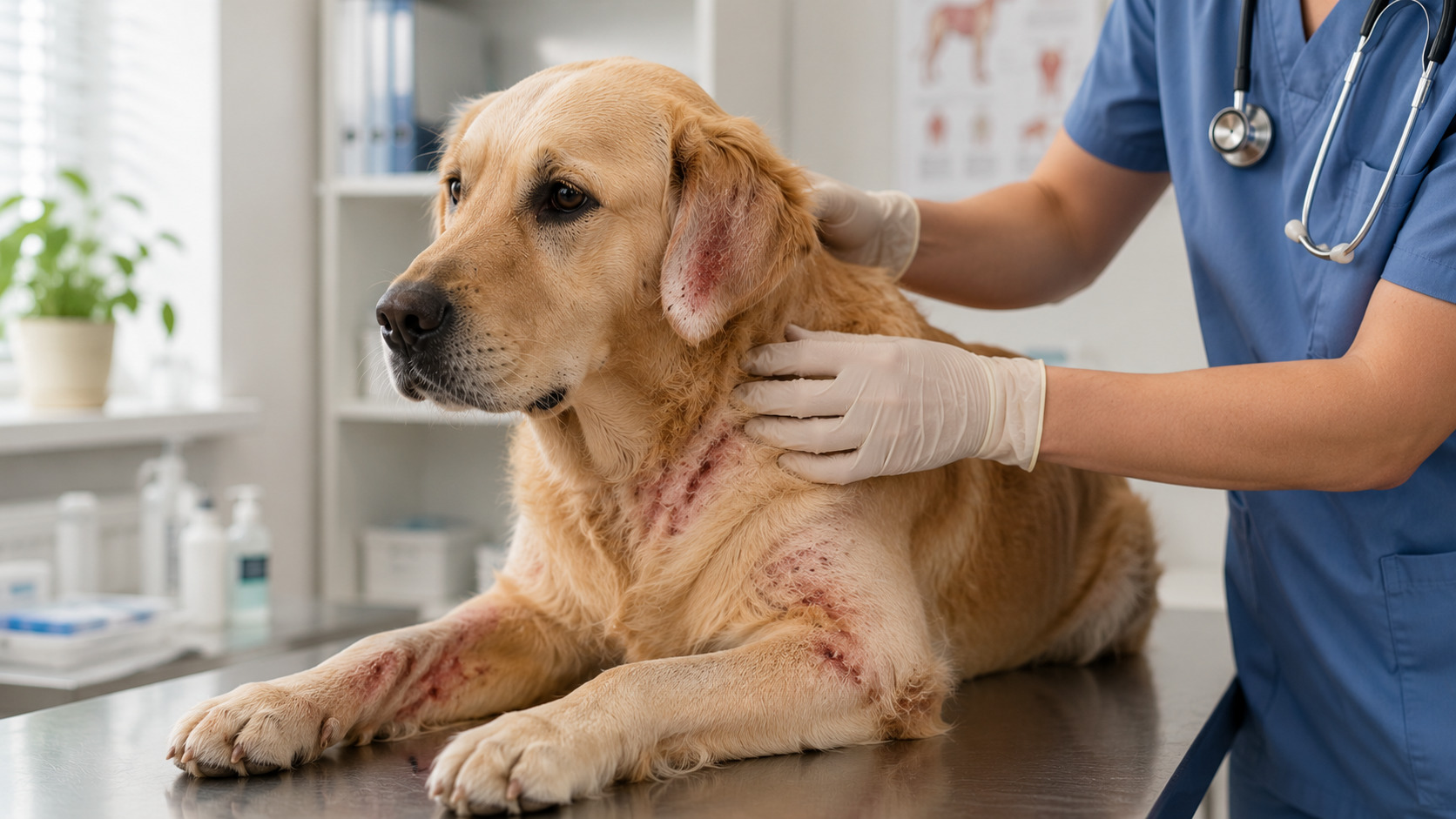
You should contact a veterinarian if itching lasts for more than a few days, the dog scratches the skin until wounds appear, or there are pustules, moist lesions, blood, severe redness, bald patches, unpleasant odor, or pain. It is also important not to ignore situations where skin symptoms are combined with lethargy, refusal to eat, increased thirst, weight loss, vomiting, diarrhea, or behavioral changes.
An examination is especially important if the problem recurs. For example, a dog may develop ear inflammation several times a year, constantly chew its paws, get “pimples” on the belly, or have seasonal flare-ups of itching. In such cases, treating only the consequences may provide a temporary effect but will not solve the main problem.
A veterinarian may perform a dermatological examination, assess the coat and skin, take cytology, perform skin scrapings, check for parasites, fungal infections, bacterial inflammation, or prescribe additional tests if needed. The approach depends on the symptoms and the dog’s condition. For the owner, the main thing is not to delay and not to experiment with medications that are not intended for animals.
How to Support Your Dog’s Skin and Coat Health

Prevention does not guarantee that a dog will never have dermatological problems, but it significantly reduces the risk of complications and helps owners notice changes earlier. This is especially important for animals prone to allergies, dogs with thick coats, skin folds, chronic ear problems, or previous episodes of infection.
Basic care should be regular and calm, without excessive interference. A dog’s skin does not need to be constantly “sterilized” or washed with aggressive products. The owner’s task is to maintain cleanliness, parasite protection, quality nutrition, and attentive observation.
The following actions help support skin and coat health:
- Regular parasite prevention. The product, schedule, and frequency should be agreed with a veterinarian, taking into account the dog’s age, weight, lifestyle, and health condition.
- Balanced nutrition. The diet should match the animal’s age, activity level, weight, and specific needs. If food allergy is suspected, foods should not be changed chaotically without a plan.
- Proper hygiene. Dogs should be bathed with products made specifically for animals. Human shampoos can disrupt the skin’s balance.
- Coat care. Regular brushing helps remove dead hair and notice parasites, crusts, bald patches, or irritation at an early stage.
- Drying after bathing. Dogs with thick coats or folds should be dried thoroughly, because moisture creates conditions for irritation and microorganism growth.
- Checking paws, ears, and folds. These areas are often affected by allergies, atopy, Malassezia overgrowth, and irritation after walks.
- Checking collars and harnesses. A collar, harness, or clothing should not rub, press, or leave damp irritated areas on the skin.
It is important not to turn care into stress for the dog. If the animal is afraid of examination, brushing, or washing, it should be introduced gradually through short calm sessions with positive reinforcement. This will make it easier for the owner to check the skin regularly without struggle or tension.
Caring for a Pet During Illness
When a dog has a skin disease, it needs not only treatment but also comfort. Constant itching, pain, odor, limited activity, a protective collar, frequent treatments, or bathing can cause stress. The animal may become irritable, restless, less sociable, or, conversely, seek more attention. This is a normal reaction to discomfort.
During treatment, it is important to provide the dog with a clean sleeping area, calm surroundings, access to water, gentle walks, and a stable routine. Bedding, blankets, and towels should be washed regularly, especially if there is a fungal or bacterial infection. If the veterinarian has prescribed a protective collar or clothing, it should be checked to make sure it does not rub the skin or create new irritation.
Emotional support is just as important. A dog does not understand why it is not allowed to lick a wound, why it is being washed with medicated shampoo, or why it has to go to the clinic. A calm voice, predictable routine, short pleasant contact, treats after procedures, and patience help reduce tension.
If the illness is long-lasting, severe, or the prognosis is difficult, the owner also needs support. Pets become part of the family, and worrying about them can be deeply emotional. In such situations, it is important not to dismiss your own feelings, but to seek support from loved ones, a veterinarian, or people who understand the value of the bond with a pet. In the future, when it becomes appropriate, the article on how to preserve the memory of a pet may also be helpful.
Conclusion
Skin diseases in dogs are not only a cosmetic problem. Itching, rashes, redness, bald patches, dandruff, oily skin, crusts, pustules, or an unpleasant odor may indicate allergies, parasites, fungal or bacterial infection, seborrhea, atopy, hormonal disorders, or other conditions. Since many symptoms are similar, an accurate diagnosis must be made by a veterinarian.
The owner’s attentiveness is very important. Regular skin checks, coat care, parasite prevention, balanced nutrition, and timely contact with a specialist help reduce the risk of complications. The earlier a problem is noticed, the easier it is to control the dog’s condition and restore its comfort.
Caring for a dog is not only about treatment, but also about presence, calm, and respect for its needs. The owner’s attentiveness often helps notice a problem in time and make the path to recovery easier.