
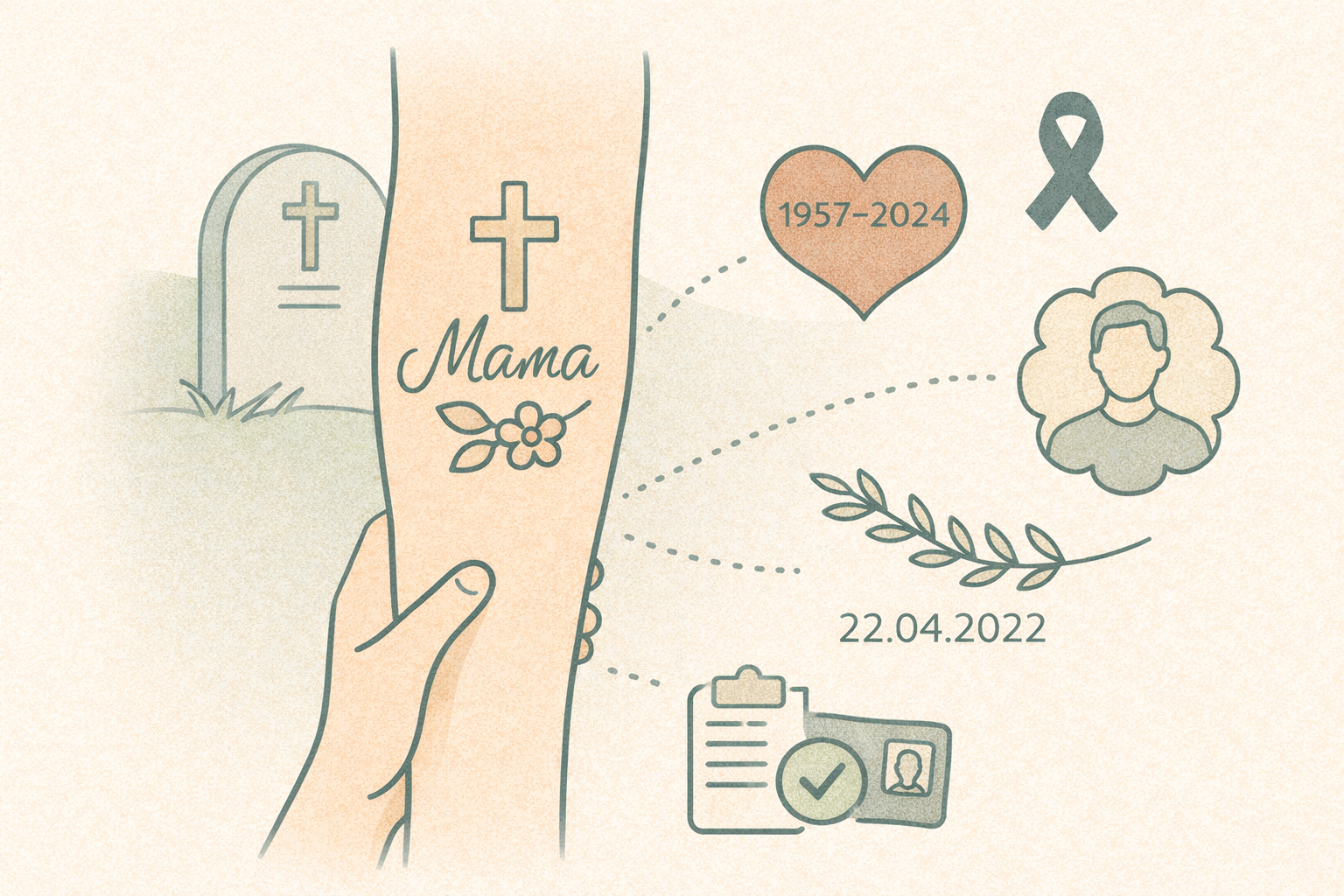
Memorial tattoos are a conscious way to preserve the memory of a person or a beloved being who has passed away, transforming personal loss into a symbol that accompanies one every day. Such commemorative tattoos go beyond aesthetics: they become part of an individual farewell ritual, an inner dialogue with memories, and a way of living through grief.
In the modern world, tattoos in memory of the deceased are increasingly chosen as an alternative or complement to traditional forms of commemoration. This is connected to changing attitudes toward death, the growing role of personalized remembrance rituals, and the spread of cremation as a practice that allows for a more flexible approach to preserving memories. Memorial tattoos naturally integrate with other contemporary forms of remembrance—from memorial jewelry to symbolic objects created using ashes.
Honoring memory through a tattoo makes it possible to capture a meaningful image, date, or symbol without being tied to a specific place. Unlike physical memorials, memory tattoos are always close, becoming a quiet yet deeply personal reminder of a bond that does not end with death.
What Is a Memorial Tattoo?
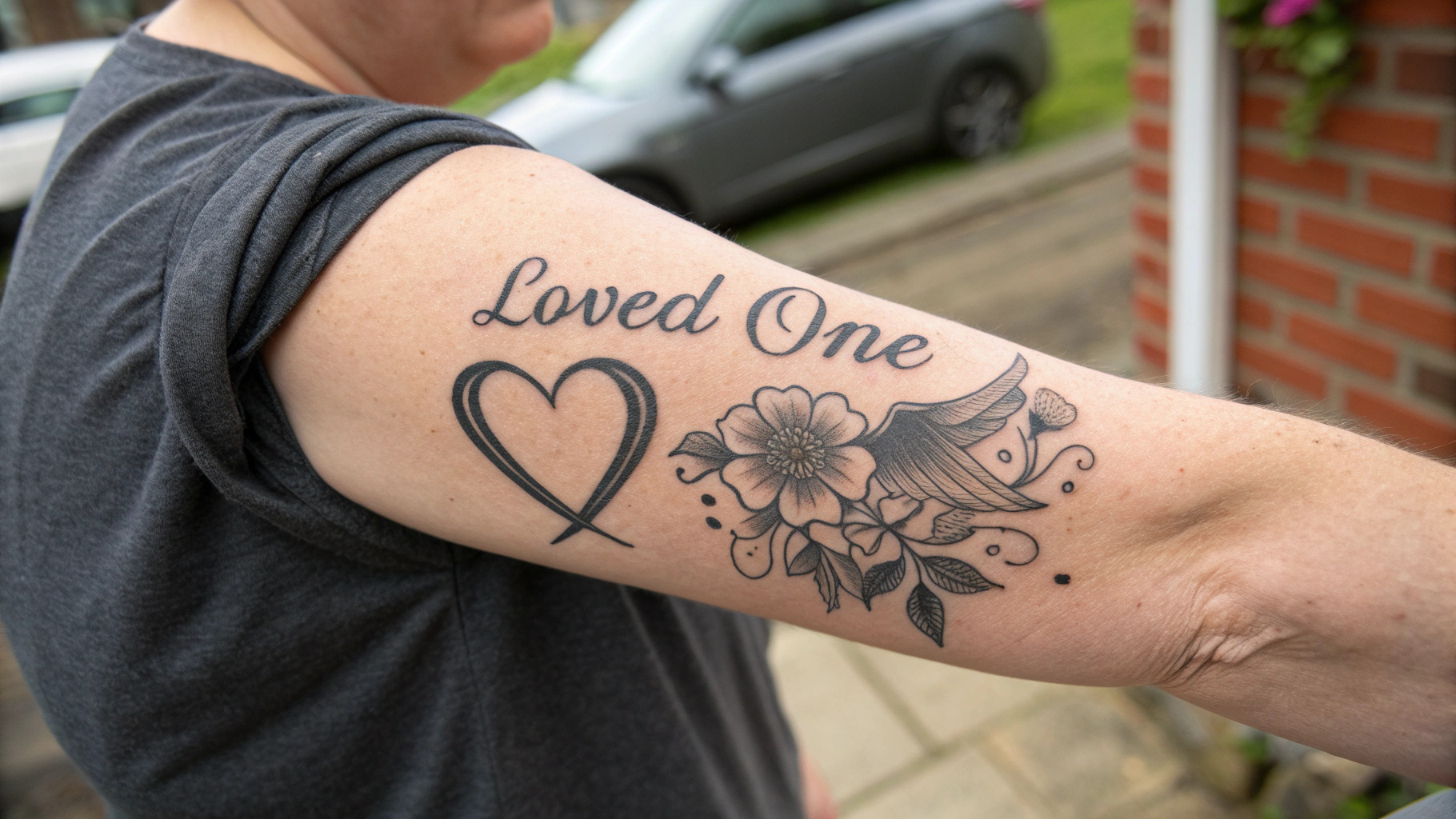
A memorial tattoo is an individual image or inscription on the body created to preserve the memory of a deceased person, a close being, or a significant event associated with loss. Unlike decorative tattoos, memorial tattoos carry deep personal meaning and primarily serve a symbolic rather than an aesthetic function.
Such commemorative tattoos may include a name, date of birth or death, initials, a fragment of handwriting, or an important symbol or image associated with the person or animal. For some, it is a restrained minimalist memory tattoo; for others, it is a complex composition of several elements that tells the story of a relationship, shared life, or farewell.
In a broader sense, a tattoo in memory of the deceased becomes a way to materialize remembrance, making it visible and constantly present. It may symbolize not only the person themselves but also values, emotions, or a life period connected with them. For many people, a memorial tattoo also plays a therapeutic role—it helps to fix memory in a form that does not fade over time and does not require external space to exist.
History and Culture of Memorial Tattoos
The idea of imprinting memory on the body is not new. In different eras, tattoos served as signs of belonging, talismans, and markers of lived experience—and at the same time were a way to “carry” what is important within oneself rather than storing it only in external objects. Therefore, the emergence of memorial tattoos as a practice is a logical continuation of a broader cultural tradition of bodily symbols.
In many communities, tattoos have long accompanied rites of passage, loss, and remembrance. They could mark mourning, show respect for ancestors, or symbolize the preservation of a spiritual connection with one’s lineage. In maritime cultures and among military communities, tattoos often became “living diaries”—in memory of fallen comrades, dangerous events, or important vows. In family traditions of various peoples, bodily symbols could replace written records where literacy was limited: memory was transmitted through signs, stories, and symbolic images.
In the 20th century, with the spread of tattoos in mass culture, the memorial function became more individualized. Whereas symbols were once often collective (understood by “one’s own”), today they are increasingly addressed primarily to the person experiencing the loss. That is why commemorative tattoos in the modern sense are not a “tradition by rules” but a personal language of memory, where each element has private meaning.
In the 21st century, the popularity of such practices has grown for several reasons:
- The desire to personalize farewell rituals. People increasingly seek forms that reflect their values, relationship histories, and ways of processing grief.
- Changing attitudes toward the body and self-expression. Tattoos have become a socially accepted tool for fixing significant experiences, not just decoration.
- The mobility of life. When people move frequently, a symbol “carried with oneself” is perceived as more reliable than memorial places that are difficult to revisit.
- Integration with modern memory practices, particularly cremation. Cremation often opens more scenarios for individual rituals, and a memory tattoo becomes one way to integrate loss into everyday life without being tied to a specific location.
Thus, a modern culture of memorial tattoos has formed: from collective symbols and traditional signs to a finely personalized gesture of remembrance chosen not “for others,” but for oneself.
Symbols and Elements in Memorial Tattoos
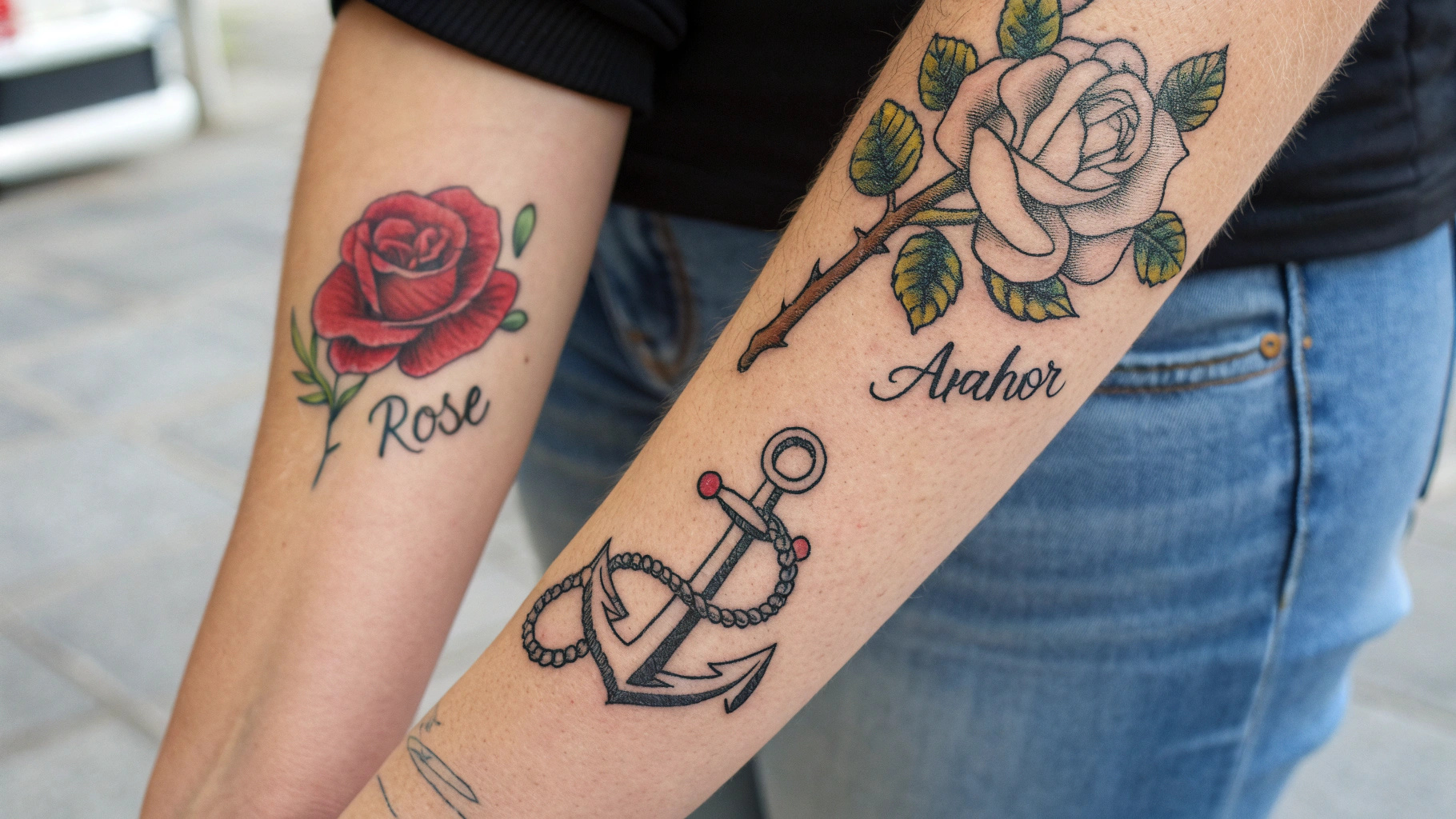
The visual language of a memorial tattoo is based on symbols capable of conveying memory without words or complementing it where words no longer work. Through images, commemorative tattoos gain depth, allowing one to capture not only the fact of loss but also the emotional bond, shared meanings, and inner dialogue with the past.
Most often, elements for memory tattoos are chosen not by popularity but by personal significance. They may be understandable only to the tattoo’s owner or to close people, but it is precisely this privacy that makes memorial tattoos especially valuable.
Names, Dates, Initials
Names, dates of birth and death, initials, or even fragments of a signature are the most direct form of fixing memory. Such elements often become the foundation of tattoos in memory of the deceased, as they require no additional explanation while carrying strong emotional charge.
Personal data can be executed in various styles—from restrained typography to integration into a more complex composition. For many, authenticity is crucial—for example, reproducing a person’s handwriting from a letter or note. In this case, the tattoo becomes not just a sign of remembrance but almost a physical touch of the past.
Symbols of Love and Connection
Hearts, infinity signs, intertwined lines, closed circles, or geometric shapes are used to convey the idea of an unbreakable bond. Such symbols emphasize that relationships do not end with death but transform into another form of presence.
In memorial tattoos, these images are often combined with initials or dates, creating a visual metaphor of love without temporal limits. For many people, this type of symbolism helps to process loss without focusing on pain, instead centering on the value of connection.
Portraits and Silhouettes
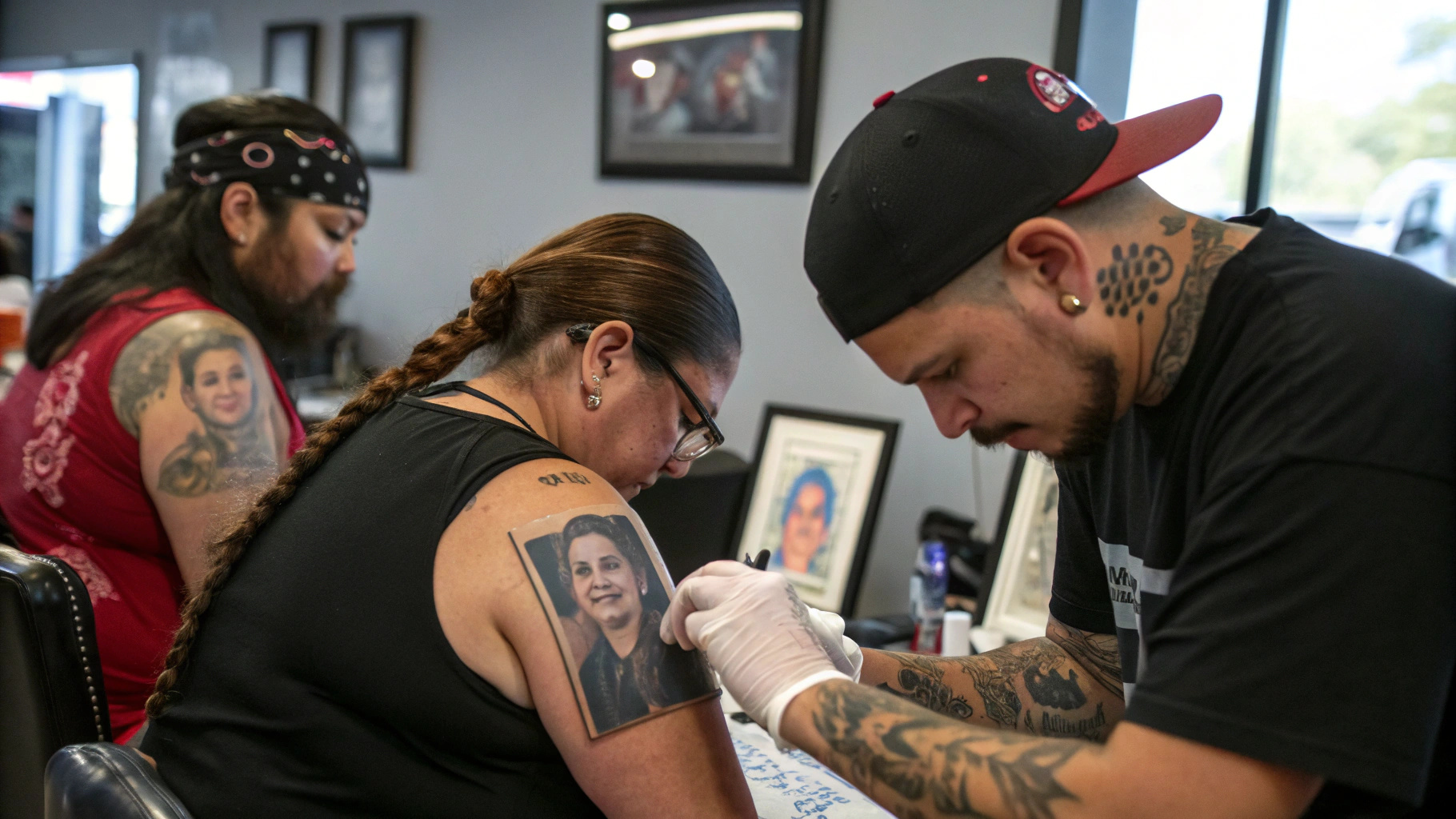
Portrait memorial tattoos are among the most emotionally complex and at the same time the most expressive options. They allow one to preserve a person’s image literally on the body, fixing facial features, a gaze, or a characteristic pose.
More often, people choose not photorealistic portraits but stylized silhouettes, contour images, or profile fragments. This approach reduces the risk of visual discomfort over time while leaving room for symbolic interpretation. Portrait commemorative tattoos require particularly careful selection of the artist and readiness for deep emotional engagement with the result.
Nature and Animal Themes
Natural motifs—flowers, trees, birds, celestial bodies—are often used as metaphors for the life cycle, transformation, and continuity. A flower may symbolize a person’s character, a life stage, or a specific memory, while a tree represents generational connection and roots.
A special place is occupied by tattoos in memory of pets. Animal silhouettes, paw prints, symbolic images, or stylized portraits become a way to honor relationships that for many were no less significant than human ones. In this context, honoring memory through a tattoo allows grief to be legitimized and the value of this bond to be emphasized without the need to justify or explain it to others.
Why Do People Choose Memorial Tattoos?
The decision to get a memorial tattoo is rarely spontaneous. Most often, it forms in response to a deep emotional need to preserve a connection with someone who is gone and to find a form of remembrance that aligns with one’s inner experience of loss. In this context, memorial tattoos perform not a decorative but a psychological and symbolic function.
Role in processing grief. Grief has no universal script. For some, traditional rituals are important; for others, personal actions that help integrate loss into their life story matter more. A memory tattoo often becomes such an individual ritual: a conscious gesture that fixes the moment of acceptance of loss or the beginning of a new stage afterward.
On a psychological level, a tattoo can:
- provide a sense of control in a situation where much was uncontrollable;
- help structure emotions by “anchoring” memory in a symbol;
- reduce the fear of forgetting by turning memory into constant presence.
For some people, a tattoo in memory of the deceased becomes a way to translate pain into a quiet, stable form of remembrance that does not fade over time and does not require constant return to a burial place.
Need for constant connection. Unlike external memorials, a tattoo does not separate memory from everyday life. It exists with the person—in movement, change, and daily situations. That is why commemorative tattoos are often chosen by those for whom the feeling of continuous connection, rather than symbolic distance, is important.
This choice is especially characteristic of people who:
- move frequently or live far from burial sites;
- do not feel an emotional connection with traditional forms of remembrance;
- seek to preserve memory in a form independent of circumstances.
Personalization of memory as a value. A memorial tattoo allows for the creation of a unique image of remembrance that is not subject to general rules or expectations. Symbol, style, scale, and placement are chosen solely with regard to personal history and an inner sense of appropriateness.
It is precisely this possibility of complete personalization that makes honoring memory through a tattoo attractive to people who seek not the “right” way to remember, but their own. In this sense, a memorial tattoo becomes not only a sign of loss but also an act of self-expression—a way to speak about love, connection, and memory in a language that requires no explanation.
How to Choose and Create a Memorial Tattoo?

Creating a memorial tattoo requires a thoughtful approach, as it concerns not only a visual image but long-term emotional interaction with it. Such a memory tattoo should remain appropriate and supportive over the years, so it is important to pay attention to every stage—from forming the idea to its physical realization.
The first step is awareness of meaning. Memorial tattoos begin not with a sketch but with an inner request: what exactly do you want to preserve—the image of a person, a shared memory, a date, a symbol of the relationship, or an emotional state? Clear understanding helps avoid random decisions and makes a tattoo in memory of the deceased part of a personal ritual rather than an impulsive reaction to pain.
Style selection should be based not on trends but on durability and psychological comfort. Minimalist solutions, restrained graphics, concise inscriptions, or delicate symbols usually “age” better and do not lose relevance over time. If the tattoo includes text, names, or dates, size and readability are crucial, as overly small details may distort with age. In a memorial context, simplicity often works toward depth.
The choice of artist plays a special role. For commemorative tattoos, not only technical skills but also experience with similar requests are critical. The artist must be able to translate emotionally complex content into visual form while maintaining precision, care, and ethical sensitivity. This is especially important for portraits, handwriting reproduction, or complex symbolic compositions.
Placement on the body also matters. It determines how public or intimate the tattoo will be, how often you will see it, and how it will be perceived in everyday life. For some, constant visibility is important as a form of daily contact with memory; for others, privacy and the ability to reveal the symbol only when needed are more important. The choice of location should consider both emotional aspects and physical factors affecting long-term tattoo quality.
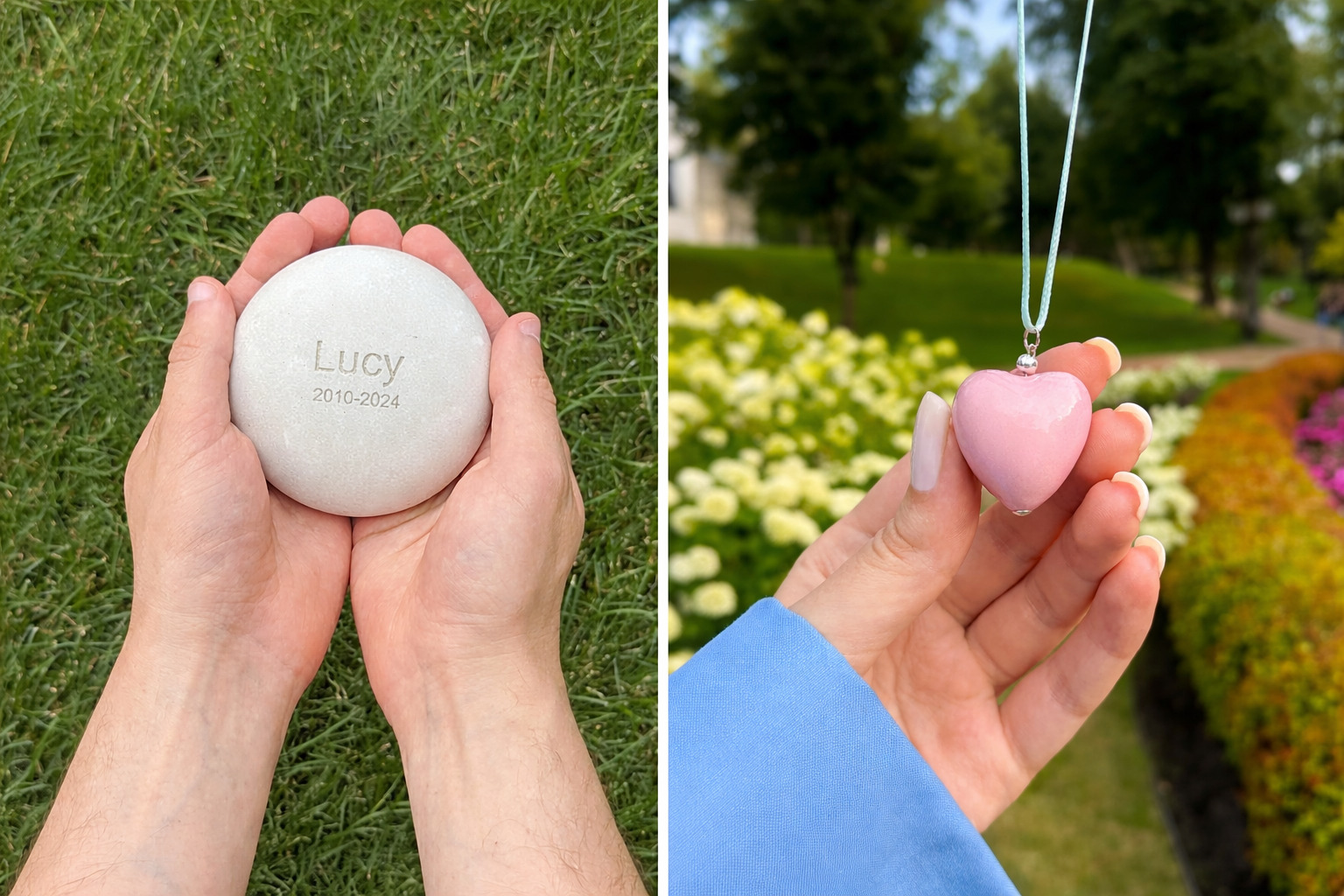
Special attention should be paid to combining a tattoo with other forms of remembrance. A memorial tattoo does not have to exist in isolation but can be part of a holistic commemorative system. For example, the tattoo’s symbol or motif may echo a Memory Stone or Spogad jewelry that preserves memory in material form. This approach allows memory to be distributed between bodily and material dimensions: the tattoo becomes an internal, personal sign, while jewelry or memorial objects become something that can be passed on, stored, or worn separately.
As a result, honoring memory through a tattoo ceases to be a single gesture and turns into a thoughtful, multi-layered practice where every element—from a line on the skin to a symbolic object—works to preserve connection rather than merely fix loss.
Ethical and Psychological Aspects of Memorial Tattoos
Memorial tattoos are a deeply personal choice, and they are not suitable for everyone. Despite the prevalence of commemorative tattoos, it is important to understand that readiness for such a step depends on the stage of grief, individual psychological characteristics, and attitudes toward bodily symbols in general. For some, a memory tattoo becomes support and a point of stability; for others, it may be emotionally too intense or even retraumatizing.
From a psychological perspective, the timing of the decision is key. If a tattoo is done during acute grief, when emotions are still unstable, there is a risk that over time the image or its form will cease to resonate with one’s inner state. In such cases, specialists often advise allowing time for emotions to take a more stable shape before proceeding to bodily fixation of memory. A conscious tattoo in memory of the deceased usually emerges not as an impulse but as the result of inner work with loss.
The ethical dimension of memorial tattoos is also connected to family and close social context. For some, such a gesture is understandable and supportive; for others, it may cause misunderstanding or resistance, especially when it involves portraits, names, or very explicit symbols of loss. In families with different views on mourning, it is important to recognize that honoring memory through a tattoo is an individual right, but it can affect the emotional state of other family members.
At the same time, a memorial tattoo does not have to be a public act. Choosing a discreet body location or an abstract symbol often allows one to maintain a balance between personal remembrance needs and respect for the sensitivity of loved ones. This approach helps avoid conflict and leaves room for different ways of experiencing grief within one family.
From an ethical perspective, it is also important to ask about the long-term impact of the decision. Memorial tattoos are permanent, and their meaning may evolve along with the person. Symbols that leave space for reinterpretation integrate more easily into later life without fixing the individual in the moment of loss. That is why the most enduring commemorative tattoos are those that not only remind of death but also preserve connection, love, and the inner presence of the one remembered.
Memorial Tattoos and Modern Memory Technologies
Today, memory increasingly exists not only in physical but also in digital form. Photos, videos, voice messages, correspondence, and family archives are stored in clouds and social networks, and a person continues to “be present” through their digital footprint after death. In this context, memorial tattoos are also changing: they can combine classical symbolism with technological solutions, creating a bridge between a bodily sign and digital memory space.
The most visible example is a tattoo with a QR code. The idea is simple: scanning the code leads to a specific digital resource where materials about the person or pet are collected. This may be a memorial page with biography, photo gallery, and memories; a video compilation; a playlist; a written letter; or even a private family archive with restricted access. Such honoring of memory through a tattoo works not only as a symbol but as a “key” to a story that is always close.
It is important to understand that QR codes as elements of commemorative tattoos require practical forethought. First, they must be large and well-executed enough to remain scannable over the years. Second, the digital resource must be stable: if the link disappears, the tattoo loses part of its function. Therefore, the best solutions are those where the memorial page is created on a reliable platform with long-term storage and update capabilities, and access can be public or private.
Technology also allows for more subtle connections between tattoos and digital memory without direct QR codes. For example, a symbol or short inscription may correspond to the name of a memorial page or digital archive known only to close people. In this format, the memory tattoo remains aesthetic and private while still integrated into a broader system of remembrance.
A separate direction is the combination of tattoos with material memorial objects. For many, it is important to have not only a bodily sign but also an item that can be worn, passed on, or kept as a family relic. This is where memorial jewelry—particularly Spogad remembrance pendants and other jewelry solutions—naturally fits. If a tattoo is the most intimate form of memory, jewelry adds a sense of physical presence that can be adjusted to context: worn daily or only on significant dates.
As a result, tattoos in memory of the deceased increasingly become not isolated symbols but part of a comprehensive architecture of remembrance. Tattoos fix meaning on the level of the body, digital tools preserve history and materials, and memorial jewelry and objects add a tactile dimension. This combination allows memory to be supported in different forms and for different needs: quietly, privately, yet technologically and durably.
Comparison: Memorial Tattoos and Other Ways of Commemoration
A memorial tattoo is one of many ways to preserve a connection with those who are gone. Its value lies in making memory part of everyday life, independent of place, visiting schedules, or external circumstances. At the same time, it does not replace other forms of commemoration but often complements them, creating a more holistic memory system. That is why commemorative tattoos are best considered alongside material memorial objects and traditional practices used for centuries.
Compared with a Memory Stone, jewelry, or other memorial items, a memory tattoo is the most intimate and immutable option. It is “embedded” in the body, always present, and requires no maintenance as an object. Memorial items function differently: they provide a sense of physical presence through touch and materiality, can be worn, stored at home, passed on to loved ones, or used on specific dates and rituals. Ash-based creations from Spogad, as well as the Memory Stone, can complement tattoos in memory of the deceased, enhancing meaning through another channel of perception. Where a tattoo is an inner sign, a memorial object becomes an external carrier of memory that can be integrated into family history.
When compared with columbaria, the key difference lies in attachment to place. A columbarium provides a structured, socially understood form of remembrance, often with a sense of shared space for honoring. For many, this is important: there is a specific location to visit, bring flowers, and be in silence. However, such a model depends on accessibility and the ability to travel, as well as how one experiences contact with an “official” memorial space. Honoring memory through a tattoo, by contrast, requires no location, no regular visits, and no geographic attachment—especially relevant for those who live far away or move frequently.
Compared with urns and other traditional forms of commemoration, memorial tattoos are more about personalization and daily, long-term contact with memory, while traditional forms often fulfill ritual and family functions. An urn, burial site, or family memorial provides a sense of closure, structure, and ritual correctness that many people find supportive in grief. At the same time, these practices may feel too formal or emotionally difficult to revisit regularly. In such cases, a memory tattoo becomes an alternative that allows connection without repeatedly immersing oneself in traumatic experience.
In practice, many people choose not “either-or” but a combination. Tattoos provide constant presence of memory, columbaria or traditional memorials provide family and ritual dimensions, and memorial jewelry or Memory Stones add materiality and transmissibility. This combination often creates the most stable support: tattoos in memory of the deceased as a personal sign, traditional practices as a cultural framework, and modern memorial objects as a way to make memory tangible and shareable.
Conclusion
A memorial tattoo is not just an image on the body but a personal way to preserve a connection with someone who is no longer here. It works as a quiet, constant presence of memory in everyday life, helps structure the experience of loss, and transforms remembrance into a symbol that does not fade with time. That is why commemorative tattoos are chosen by people who want not only to “remember” but also to feel inner support throughout the grieving process.
The value of this choice lies in personalization. A memory tattoo can be minimalist or complex, private or visible, but its meaning is always defined by a specific story of love, closeness, and loss. At the same time, a memorial tattoo does not exist in isolation: it naturally integrates with modern ways of preserving memories, including digital memorials, memory pages, and material symbols of remembrance.
When honoring memory through a tattoo is complemented by a Memory Stone or Spogad jewelry, memory gains multiple dimensions. The tattoo fixes meaning at the bodily level, while memorial objects add materiality that can be worn, stored, or passed on. This creates a more holistic, modern culture of remembrance in which individuals have the right to choose their own form of farewell and way of preserving connection.
Ultimately, tattoos in memory of the deceased are not about “holding on to the past,” but about integrating it into life with dignity and honesty—respecting feelings, relationship history, and one’s own pace of living through loss.