
After losing a loved one, a family faces not only emotional pain but also practical questions that are difficult to handle while grieving. One of them is what to do with the personal belongings of the deceased. Clothing, jewellery, documents, photographs, and household items often carry not only material value but also deep symbolic meaning, so decisions about them are rarely simple.
This issue is tied to emotions, family agreements, and life circumstances. For some people, it is important not to change anything for a while; for others, it feels right to sort through belongings gradually in order to restore order and reduce everyday stress. The condition of the items, the existence of written wishes regarding property, and the possibility of passing some belongings on to loved ones or donating them to charity may also affect the decision.
There is no universal solution here. The most important thing is not to rush, to take loved ones’ opinions into account, and to choose the approach that helps preserve respect for the person’s memory while also being gentle with your own emotional state.
Why This Question Matters So Much

A deceased person’s belongings are often seen not simply as objects, but as part of the memory of that person. A favourite jumper, mug, book with notes in the margins, watch, or photo album can stir strong emotions because they bring back shared moments, familiar habits, and the loved one’s presence in daily life.
For many people, such belongings help preserve a sense of connection after loss. Some want to leave everything untouched for a while, while others prefer to keep only a few of the most meaningful items. Both approaches are normal if they match the person’s inner readiness.
In the first days and weeks after a loss, emotional stability is often fragile. That is why decisions about belongings are better made when there is at least a minimal sense of footing. Time truly matters in such a situation: it helps prevent impulsive actions and makes it easier to deal with practical matters more calmly.
When Should You Sort Through a Deceased Person’s Belongings?
There is no single right time to sort through a deceased person’s belongings. For some, it becomes possible after a few weeks; for others, it may take months. In this matter, there is no right or wrong pace.
Different circumstances affect the decision. First of all, there is the psychological readiness of the individual or the whole family. Practical factors also matter: the need to clear out a home, relocation, the need to settle property matters, or simply the desire to gradually restore order to the space. In some families, cultural, religious, or family customs also play an additional role.
If there is no urgent need to hurry, it is better to give yourself time. If circumstances require quicker action, it is worth starting step by step: first set aside documents, valuables, and items with particular emotional significance, and return to the rest later.
Another helpful approach is simply to look through the belongings first and separate out what definitely needs to be kept, then decide later what to do with the remaining items. This helps avoid abrupt decisions and reduces inner tension.
Main Options: What You Can Do with the Belongings
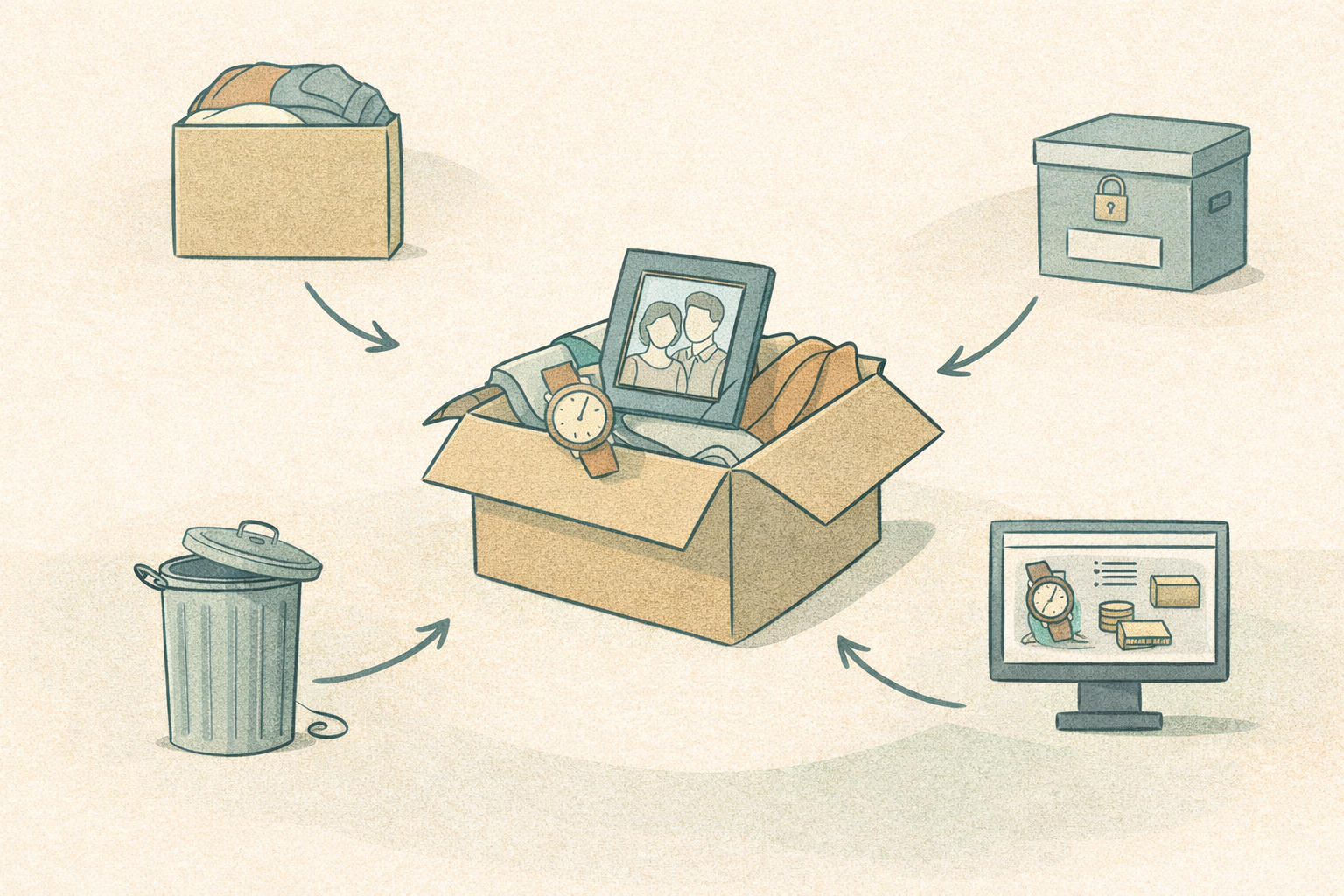
Once the most acute stage of grief has passed, a practical question gradually arises for the family: what should be done with the deceased person’s belongings next? Most often, they are kept as mementoes, passed on to loved ones, donated to charity, sold, or disposed of. These options are often combined.
Keep Them as Mementoes
Some belongings are often kept because of their special emotional value. These are usually photographs, jewellery, watches, letters, notebooks, favourite books, or small personal items that are most strongly associated with the person.
There is no need to keep everything. For some, this may mean a few symbolic items; for others, a separate memory box or a small space at home with photographs and meaningful keepsakes. This choice helps preserve a sense of connection without overcrowding the space.
Pass Them On to Relatives or Friends
Another common option is to pass belongings on to relatives or friends. These may include books, jewellery, dishes, tools, decorative items, or sentimental keepsakes that hold special meaning for specific people.
At the same time, such decisions should be agreed upon within the family. It is precisely around the distribution of personal belongings that hurt feelings and misunderstandings most often arise. To avoid this, it is better to discuss in advance which items hold special meaning and who would like to keep them.
Donate Them to Charity
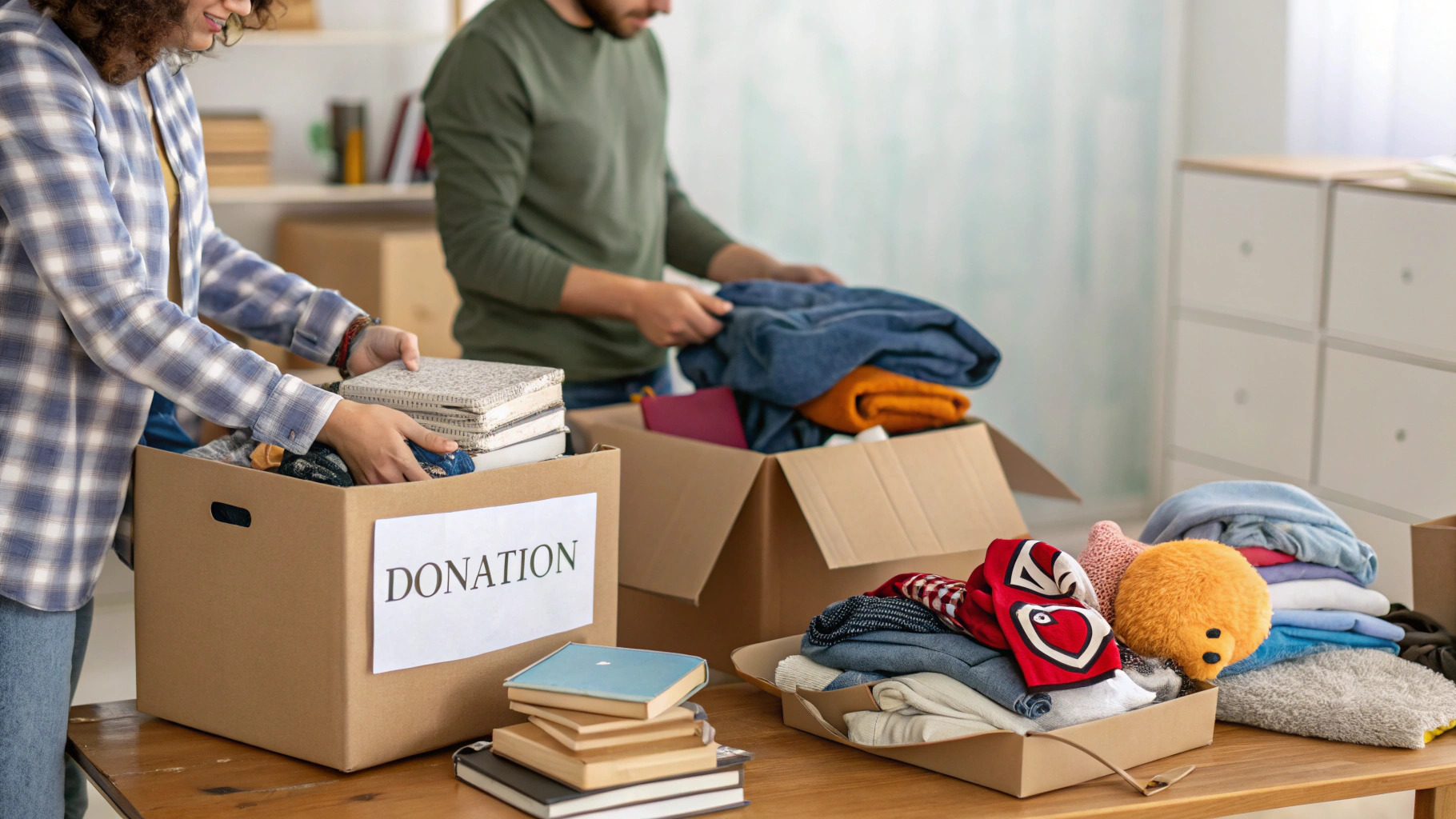
If the belongings are in good condition, donating them to charity can be one of the more thoughtful options. Clothes, shoes, books, textiles, dishes, furniture, and other household items may be useful to those who need them.
For some families, this is not only a practical step but also a way of giving the items continued value. This option may be especially important when there is no possibility of keeping everything, or when doing so feels emotionally too difficult.
Sell or Dispose of Them
Not all belongings have emotional or family value. Some of them may be purely practical: old appliances, furniture, worn clothing, or items that no one plans to use in the future. In such cases, selling or disposing of them is a completely natural decision.
If an item is in good condition and has material value, it may be sold after discussion with loved ones and, if necessary, after property matters have been settled. If the items are damaged, outdated, or unsuitable for further use, it is more appropriate to dispose of them.
How to Handle a Deceased Person’s Belongings Properly
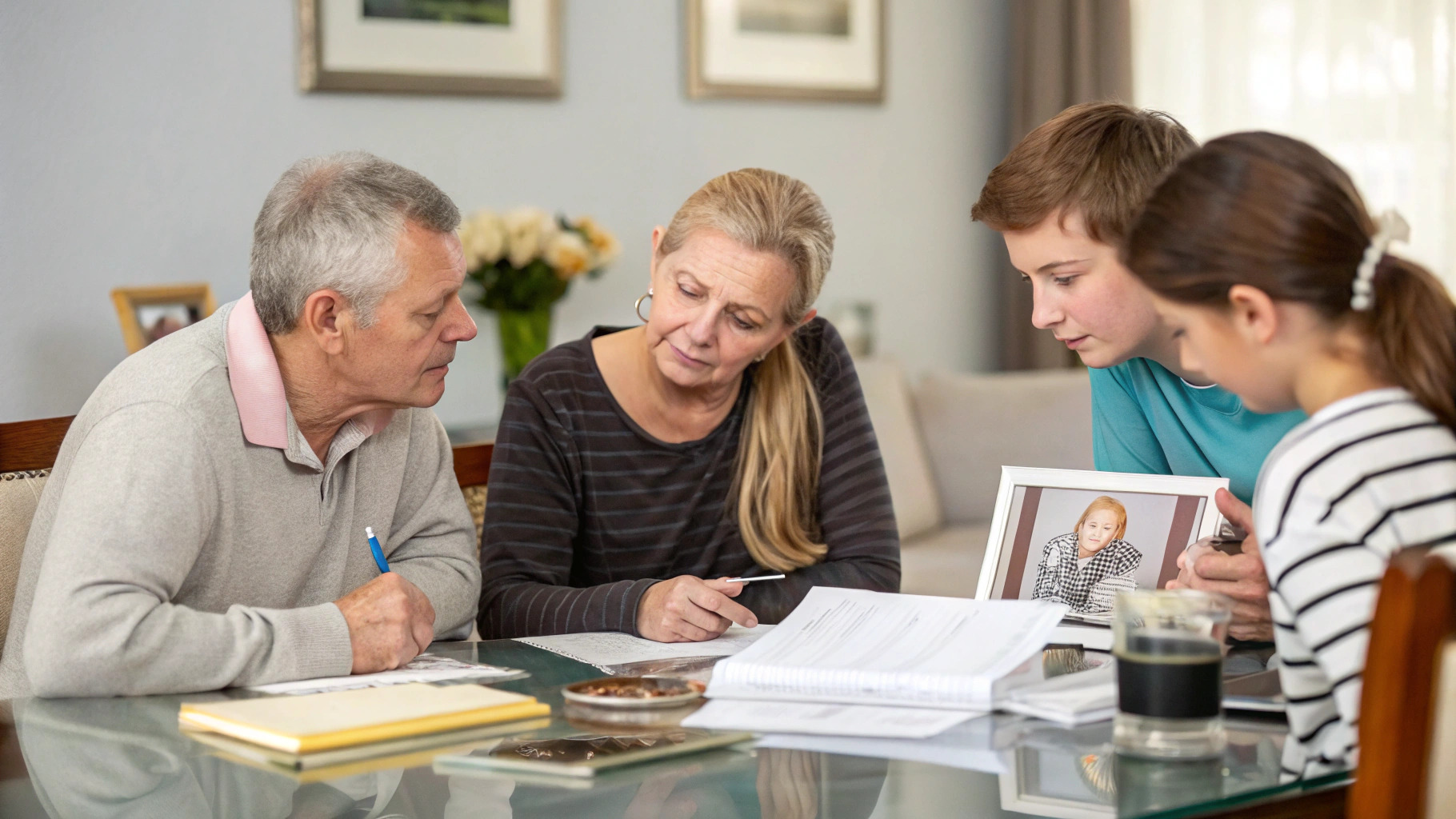
To decide what to do with a deceased person’s belongings, it is important to balance emotional sensitivity with a practical approach. In most cases, the best solution is a calm family discussion, without haste or mutual pressure.
Respect for the opinions of all family members helps avoid conflict. Even if some items seem insignificant, they may have special sentimental value for someone close. It is helpful to agree in advance which items should be set aside separately, what can be distributed immediately, and what should be left until later.
Particular attention should be paid to documents, written wishes, the existence of a will, and any arrangements that may concern property or personal belongings. If such instructions exist, they should be taken into account. If necessary, it is worth consulting a specialist in property or inheritance matters.
If there are no clear instructions, it is best to act with particular care and transparency. It helps when all agreements concerning the belongings are discussed openly, without hidden decisions or rushed removal of property.
Specific Features of Different Categories of Belongings

To avoid feeling overwhelmed, it is helpful to sort belongings into groups. Broadly, they can be divided into emotional, valuable, and everyday items.
Emotional items usually include photographs, letters, favourite keepsakes, and personal possessions. Valuable items include documents, jewellery, financial papers, equipment, or property that may have legal significance. Everyday items include clothing, textiles, dishes, furniture, and other ordinary household things. This division helps avoid chaos and makes decision-making calmer.
Clothing and Personal Items
Clothing and everyday personal items often trigger the strongest emotional response because they are directly tied to the person’s image in daily life. That is why sorting through this category often takes the most time.
If certain items hold special meaning - for example, a favourite jumper, scarf, glasses, book, watch, or piece of jewellery - they can be kept as mementoes. The rest, if they are in good condition and do not hold special value for the family, can be passed on to loved ones or donated to charity. Worn or unusable items are best disposed of.
Valuable Items and Documents
Valuable items and documents require especially careful handling, because they involve not only memory but also legal and financial consequences. First of all, it is worth gathering all important documents: personal papers, contracts, property documents, financial records, and other materials that may be needed for future formalities.
Jewellery, cash, collections, antiques, equipment, and other items of material value should not be given away or otherwise transferred until it is clear whether there are any related property or legal issues. If there is any uncertainty, it is better not to rush and to clarify the proper procedure with a specialist.
Items Connected to the Moment of Death
Special attention should also be given to items directly connected to the moment of death or the final period of serious illness. These may include bed linen, clothing, care products, medical materials, or assistive devices.
In such cases, it is important to be guided not only by emotion but also by hygiene and safety rules. If an item can be safely cleaned or disinfected, that should be done before keeping it, giving it to someone else, or returning it to household use. If items are contaminated, linked to health risks, or unsuitable for further use, they are best disposed of. If there is any doubt, it is worth consulting relevant services or medical professionals.
Cultural and Religious Traditions
The decision about what to do with a deceased person’s belongings often depends not only on personal feelings but also on cultural and religious traditions. In many families, it is customary not to touch personal belongings for a certain period, postponing sorting them until the first period of mourning has passed.
In some families, decisions about belongings are postponed until a time when it becomes emotionally a little easier to return to the issue. For many people, this is part of saying goodbye and helps them get through the first weeks after loss without rushing.
At the same time, there is another, more practical approach. In such cases, attention is focused on settling property matters, distributing belongings among loved ones, or passing items on elsewhere. For some families, this feels like the more natural way.
None of these approaches is universal. Even within the same culture or tradition, different families may act differently. That is why it is important to be guided not only by customs but also by the inner readiness of loved ones and by real-life circumstances.
How to Prepare Emotionally to Pass On Belongings
Passing on or sorting through a deceased person’s belongings is almost always accompanied by strong emotions. Even if the decision seems logical, in practice it may bring sadness, guilt, confusion, or a sense of final farewell.
The first thing you should allow yourself is time. There is no need to force yourself to resolve everything quickly simply because others advise it or because a sense of order seems to demand it. Each person goes through this process at their own pace.
For many people, the support of loved ones at this moment is helpful, although for some it may be easier to do it alone. Calm presence, the opportunity to share memories, or the ability to pause when needed can make this stage gentler. If the emotional burden becomes too heavy, it is worth seeking help from a psychologist or crisis counsellor. In this context, material on how to cope with the loss of a loved one may also be helpful.
It is also important to remember: passing on belongings does not mean forgetting the person. Memory does not disappear with objects. It remains in relationships, memories, family stories, and symbols that continue to matter to you.
Modern Ways of Preserving Memory Through Belongings

Today, the memory of a loved one is increasingly preserved not only through familiar objects but also through specially created symbolic forms. For many families, it is important not simply to keep belongings, but to give them new meaning - a meaning that helps maintain a sense of connection without having to keep a large number of household items.
These may include framed photographs, memory boxes, decorative items, symbolic objects with engraving, a piece of fabric, handwriting, or another personal detail. For some people, more individual solutions connected with preserving a tangible symbol of memory may also be important.
A special place among such options belongs to memorial jewellery containing ashes and other personalised objects in which part of the ashes is preserved in physical form. For many, this becomes an important source of comfort after cremation, when they want to have not just a memory nearby, but a tangible symbol of remembrance. One such delicate format may be a Memory Corner, if this is a form of commemoration that feels right for the family.
The advantage of such approaches is that they do not force people to choose between keeping everything and letting go of everything. They make it possible to find a personal format of remembrance - one that is meaningful, symbolic, and comfortable for your family.
What You Should Not Do with a Deceased Person’s Belongings
When a family decides what to do with a deceased person’s belongings, mistakes most often happen not because of indifference, but because of exhaustion, emotional strain, and the desire to get through a difficult period as quickly as possible. To avoid regret or conflict, it is better not to do the following:
- sort through belongings hastily in the first days after the loss, when emotions are still too unstable;
- throw away or give away items without discussing it with other loved ones;
- ignore the views of family members for whom certain items may hold special value;
- sell valuable items or property before possible inheritance or ownership matters have been settled;
- get rid of everything at once without leaving a single symbol of remembrance, if this may later cause regret;
- donate or dispose of items that have not yet been carefully reviewed;
- pressure yourself or others if there is still no emotional readiness to do so.
The safest approach is to act gradually, with respect for the person’s memory and for the feelings of those who are grieving.
Conclusion
The question of what to do with a deceased person’s belongings is always deeply personal. There is no single correct answer or universal scenario in this matter. For some families, it is important to keep more; for others, to keep only a few of the most meaningful items and pass the rest on.
The most important thing is not to rush, to take loved ones’ feelings into account, and to make decisions without pressure. Belongings may preserve memory, but memory itself is not limited to objects. It lives in recollections, family stories, important symbols, and the forms of presence a person leaves behind.
Sometimes a few personal items are enough, and sometimes a single symbol helps preserve a sense of connection and remembrance in a way that feels close and meaningful. That is why it is worth choosing the way that feels sincere, gentle, and truly significant for your family.